
For most people, sweeteners are not bad for you. If the choice is between a sugary drink and one made with sweeteners, the sweetened version is the better pick, simply because you skip a lot of calories. Water is still the ideal, but when it’s sugar versus sweetener, sweetener wins.
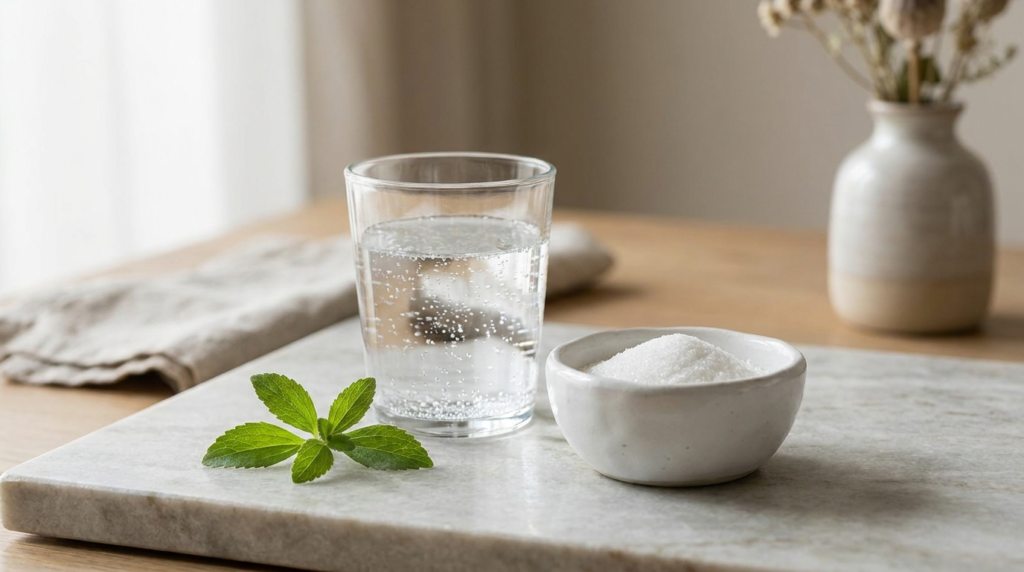
Sweeteners versus sugar: which is better?
Sugar has two main drawbacks. It’s calorie-dense at roughly 4 calories per gram, and it tends to nudge your appetite upward. A typical soft drink holds around 10 grams of sugar per 100ml, which works out at about 40 calories per 100ml. Swap it for a zero version and those calories simply disappear.
The real gain sits in drinks rather than solid food. In a full meal the effect is much smaller, but sugary drinks are an easy place to shed calories you won’t miss. In practice a diet or zero drink costs about the same as the sugary one, so the switch doesn’t hit your wallet.
The two types: artificial and natural
Artificial (synthetic) sweeteners include aspartame, acesulfame-K, sucralose and saccharin. These are intensely sweet: aspartame is around 200 times sweeter than sugar, and sucralose around 500 times. Because you need so little, sucralose effectively adds no calories.
Natural sweeteners include the sugar alcohols (polyols) such as erythritol, xylitol and sorbitol, plus stevia and allulose. These carry a small calorie value, often somewhere around 0.2 to 1 calorie per gram.
What do sweeteners do to your gut?
Artificial sweeteners can shift your gut bacteria slightly, and not necessarily in a helpful direction, as they may encourage some less desirable strains to grow.
Natural sugar alcohols get fermented in the gut and can cause bloating, wind and stomach upset. Sorbitol is the worst offender here, with erythritol being gentler but still a possible trigger. If you have a sensitive gut or IBS, these are worth going easy on.
Effect on insulin and weight loss
The sweet taste alone can make your brain expect incoming sugar, which may cause a small insulin blip and a slight urge to eat. The important word is small, and it doesn’t happen to everyone.
In controlled studies, people using sweeteners instead of sugar often lose a little weight. In everyday life the difference is less clear-cut, most likely because people unconsciously make up for the saved calories by eating a bit more elsewhere.
Do sweeteners raise the risk of heart disease or cancer?
On current evidence, no convincing link stands up. With heart disease, studies struggle to separate compounds that come from food versus those the body makes itself, which muddies the picture. With cancer, human studies show no clear connection; the raised risk seen in some animal studies only appeared at extremely high doses, far beyond anything a normal diet delivers.
As one doctor put it, unless you’re drinking something like twenty cans of cola every single day from birth, you’re very unlikely to run into trouble.
Which sweetener is the healthiest?
If you’re picking a favourite, the natural options tend to come out ahead: sugar alcohols like erythritol and xylitol, stevia, and allulose in particular.
Allulose is interesting. It gets absorbed and passed out in urine rather than travelling through the gut, so it’s gentle on digestion. It satisfies a sweet craving well, adds barely any calories (around 0.2 per gram), and may even help you flush out a little extra sugar. The catch is that it keeps less well, so it suits home cooking more than shop-bought products.
The advice in short
Water is the best choice, full stop. But when it’s a straight choice between a sugary drink and a sweetened one, go for the sweetener. A few things to keep in mind:
- Keep the rest of your diet the same, and don’t quietly make up the saved calories elsewhere.
- Notice how your body copes, especially if you have a sensitive gut and are using sugar alcohols.
- Where you can, lean towards natural sweeteners, and try allulose at home if you fancy experimenting.
Frequently asked questions
Is aspartame harmful?
In normal amounts, no. It’s so sweet that you only need a tiny quantity. The raised cancer risk you may have read about only turned up in animal studies at extremely high doses, well beyond what anyone would get from ordinary food and drink.
Do sweeteners help with weight loss?
They can, mainly by replacing sugar in drinks and cutting the calories that come with it. The catch is that you have to actually keep those saved calories off. Because sweeteners can nudge your craving for sweet things, it’s easy to make up for them by eating more elsewhere.
Which sweetener is the healthiest?
Natural ones tend to edge it: erythritol, xylitol, stevia and especially allulose. Allulose satisfies a sweet craving well, is easy on your gut and adds almost no calories.
Are sweeteners bad for your gut?
It depends on the type and on you. Artificial sweeteners can shift your gut bacteria slightly. Natural sugar alcohols can cause bloating and stomach upset, particularly if you have a sensitive or irritable gut.
Do sweeteners cause an insulin spike?
At most a very small one. The sweet taste can make your body anticipate sugar, but the effect is minor and doesn’t apply to everyone.
Do sweeteners cause heart disease?
There’s no convincing evidence that they do. The population studies we have don’t show a clear link, and the research that raises concern struggles to separate cause from coincidence.