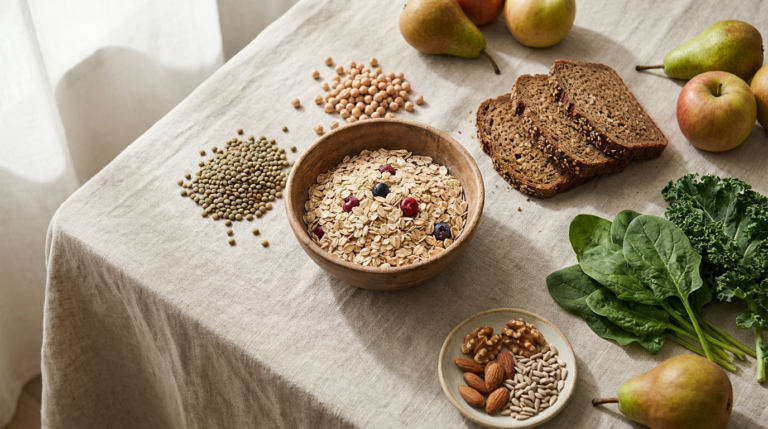

Your brain does best on oily fish (for omega-3), plenty of vegetables and fruit, wholegrains, nuts and pulses, with olive oil as your main fat. What you eat shapes not just how your body performs, but how you think, focus and feel. The good news is you do not need an exotic diet to get there. Eating mostly whole, plant-rich food already covers most of what your brain needs.
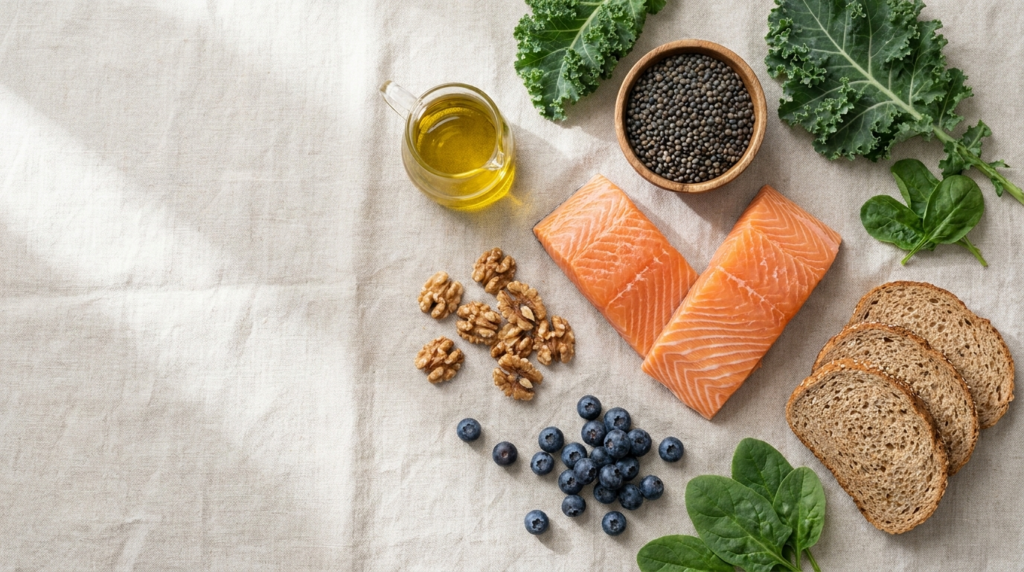
Which foods are good for your brain?
The building blocks of a brain-friendly diet are simple and not remotely fancy. Oily fish such as salmon and mackerel provide omega-3. On top of that: plenty of vegetables and fruit, wholegrain products, nuts and pulses like beans and lentils, and plant-based oils, with extra virgin olive oil as the standout.
None of this is exotic. If you eat mostly whole foods and lean on that shortlist, you are already doing the hard part. There is no single “superfood” that does the work on its own, it is the overall pattern that counts.
Why does healthy food affect your brain?
Several things happen at once, and the gut sits at the centre of most of them.
Wholefoods contain fibre, polyphenols and resistant starches. Your own body cannot break these down, but the helpful bacteria in your gut can. As they feed, they produce short-chain fatty acids and anti-inflammatory compounds, while less helpful bacteria have less to live on and shrink back.
The gut also does a surprising amount of chemistry. A large share of the body’s serotonin, one of the messengers tied to mood, is made in the gut rather than the head. That is one reason the link between what you eat and how you feel is more than a hunch. Chronic, low-grade inflammation is also more common in some people who struggle with low mood, and diet is one of the levers that influences it.
Polyphenols, fibre and resistant starches: food for your gut
Polyphenols are the compounds that give plants their colour, smell and taste. Think red grapes, dark chocolate and red peppers. Fibre and resistant starches act like chains your body cannot unpick, but your gut bacteria happily can, turning them into useful substances.
You do not need to track individual types of fibre or chase specific polyphenols. Eat enough varied plant food and you get the whole package by default. Variety on the plate does more than any single “gut hack”.
Omega-3 and oily fish: important for your brain
Your brain is largely made of fat, and the omega-3 fatty acids DHA and EPA are among its key building blocks. Omega-3 helps dampen inflammation and supports a healthier gut as well. Across populations, more fish on the plate tends to line up with lower rates of depression.
What about capsules? For preventing low mood in people who are well, omega-3 supplements show little clear benefit. For people already dealing with depression, higher-EPA supplements (roughly 2 grams a day) may offer some help, and that is a conversation to have with a doctor rather than something to self-prescribe. For everyday mental wellbeing, eating actual fish beats a supplement. A tin of mackerel or sardines is one of the cheaper ways to get there, so this need not be an expensive habit.
Sugar, ultra-processed food and your gut
A poor diet does not just fail to help, it can actively work against you. Studies show a fast-food-heavy pattern can shift your gut flora within days, favouring the less helpful bacteria. Those bacteria thin the protective mucus layer that lines the gut, which lets unwanted substances slip through and can trigger inflammation.
Here is the part people miss: you cannot simply cancel out ultra-processed food by eating something healthy alongside it. The processed side is pulling in the wrong direction at the same time. Cutting back matters as much as adding the good stuff.
How to put it into practice
You can ignore the extreme diets, carnivore at one end, ultra-restrictive plant-based at the other. A far simpler frame does the job. Aim for:
- Drinks: mostly water, plus tea and coffee without piling in sugar.
- Vegetables and fruit: usually the category people fall short on, so this is where the biggest wins are.
- Wholegrains (and potatoes) rather than heavily refined versions.
- Protein: fish, poultry, tofu, tempeh, beans and nuts.
- Fats and dairy: lean on plant-based oils, especially extra virgin olive oil, over foods high in saturated fat.
A useful reality check: most of what fills a typical supermarket sits outside this simple list. Keep biscuits, sweets and chocolate to a minimum and let whole foods take up most of the trolley.
One honest caveat. Food is not a cure and it is not a substitute for medical care. If you are worried about your mental health, speak to your doctor first, then work on nutrition, movement and sleep alongside whatever support you get. Diet is a strong foundation, not a treatment.
Frequently asked questions
Which foods are best for your brain?
Oily fish for omega-3, plenty of vegetables and fruit, wholegrains, nuts and pulses, and plant-based oils such as olive oil. Follow a simple, whole-food pattern and keep ultra-processed foods to a minimum. That combination feeds your gut bacteria, helps lower inflammation and supports serotonin production, all of which matter for how your brain works.
Is omega-3 good for your brain?
Yes. Your brain is largely made of fat, and the omega-3 fatty acids DHA and EPA are key building blocks. People who eat more fish tend to have lower rates of low mood. Supplements do not clearly prevent depression, though higher-EPA doses (around 2 grams a day) may help people already dealing with it. For everyday mental wellbeing, eating actual fish beats capsules.
Does sugar affect your concentration and mood?
It can. A diet high in sugar, saturated fat and salt can shift your gut bacteria in an unhelpful direction, sometimes within days. That can drive low-grade inflammation and disrupt the useful substances your gut normally produces. So unhealthy eating does not just leave a gap, it can actively work against how you feel and focus.
How does food affect your mental health?
Mostly through the gut. Fibre, polyphenols and resistant starches feed helpful bacteria that produce anti-inflammatory compounds, short-chain fatty acids and much of your serotonin. On top of that, omega-3 fatty acids directly support brain function. It is not one single mechanism but several working together, which is why the overall pattern of your diet matters more than any single food.
Can a healthy diet help with low mood or anxiety?
It can help. Several studies have found that people following a Mediterranean-style diet saw a meaningful drop in symptoms over about twelve weeks. That said, food is not guaranteed to fix things and it is not a replacement for professional care. The sensible order is to speak to your doctor first, then work on nutrition, movement and sleep at the same time.
What is the best diet for your brain?
You do not need anything exotic. Mediterranean, Scandinavian and Japanese diets all share the same foundation: mostly plant-based, some fish, and very little ultra-processed food. For most people, simply eating whole foods with plenty of vegetables and fruit delivers the bulk of the benefit without any special rules.