
The best plant-based protein shake is a blend, usually pea plus rice, or a naturally complete protein like soya, with a high protein content per serving and a short ingredient list. A vegan protein gives you extra protein without any animal ingredients. It is handy if you eat plant-based, don’t get on well with lactose, or simply want a more sustainable option. Plant protein is made from sources such as pea, rice, soya and hemp, and is naturally lactose-free. For many people it sits lighter than whey, and producing it tends to be easier on the environment than dairy protein.
What are plant-based proteins?
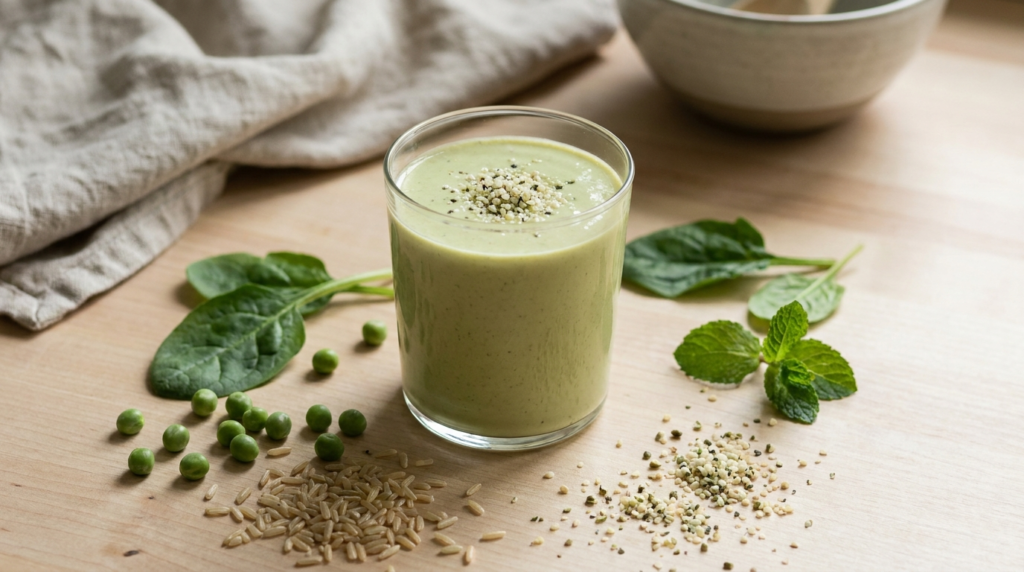
Plant proteins come from crops rather than dairy or meat. The four sources you’ll see most often in shakes are:
- Pea protein — rich in the amino acids that matter for building muscle, neutral in taste and the most widely used.
- Rice protein — easy to digest and often paired with pea to round out the amino acid profile.
- Soya protein — naturally a complete protein, with all the essential amino acids.
- Hemp protein — also brings fibre and healthy fats, though usually with a lower protein percentage per serving.
Plenty of brands mix sources into a blend, because a combination gives a more complete amino acid profile than any single source on its own.
Plant-based versus whey: the difference
Whey comes from milk and naturally contains all the essential amino acids in a favourable ratio, with plenty of leucine for muscle building. A single plant source can be short on some of those amino acids, or lower in them.
That’s why good vegan shakes use a blend, for example pea plus rice, so the profile still comes out complete. Plant protein is also lighter on the stomach for most people, since it contains no lactose. The main practical differences:
- Amino acids — whey is complete on its own; plant-based often gets there through a blend.
- Digestion — plant protein is lactose-free and tends to be gentler on the gut.
- Taste and texture — whey is usually creamier, while plant-based can feel a bit thicker or grainier.
What to look for when choosing
Don’t just compare the price on the tub. Pay attention to these points:
- Protein per serving — how many grams of protein are actually in one scoop? That decides how much you get for your money.
- Price per serving — work the price back to a single shake, not the whole tub. A bigger tub can look pricey but often works out cheaper per serving.
- Taste and texture — plant-based is more prone to a grainy mouthfeel. A blend with rice, or a well-judged flavour, helps.
- Ingredients — check whether it’s a blend and how short the ingredient list is.
Who is a plant-based protein shake for?
A vegan protein is a sensible choice if you:
- Eat vegan or vegetarian and would rather avoid animal products.
- Are lactose intolerant and react badly to whey or other dairy.
- Have a sensitive stomach and want a protein that’s easier to digest.
- Want a more sustainable option, since plant protein is generally lighter on production.
And if you just want some variety in your protein sources, a plant-based shake is a perfectly good addition.
Are they as good for muscle growth?
For building muscle, what matters most is getting enough protein and making sure that protein is complete. A good plant-based shake can do that just fine.
So keep two things in mind: pick a complete protein (such as soya) or a blend (such as pea plus rice), and make sure you hit enough grams of protein across the day. Because a single plant source can be slightly lower in certain amino acids, a marginally larger serving can help. Beyond that, it makes little difference to your results in practice.
How to use the comparison below
The overview below lists the current plant-based protein shakes from the catalogue, with their real prices. To get the most out of it:
- Look first at the protein per serving and work out the price per serving.
- Lean towards a blend or a complete protein if muscle growth is your goal.
- Not sure about the flavour? Start with a smaller tub to try it before committing to a big one.
The prices in the overview update automatically, so what you see is always current.
Frequently asked questions
Is plant-based protein as good as whey?
For most goals, yes. Whey is naturally a complete protein, while plant-based usually gets there through a blend such as pea and rice. As long as you get enough protein and choose a complete protein or a blend, the difference is small in practice. Plant-based has the added benefit of being lactose-free and easier to digest.
What is the best vegan protein for muscle growth?
A complete protein like soya, or a blend of pea and rice, works best for muscle growth because it supplies all the essential amino acids. More important than the brand is hitting enough grams of protein per day. Compare the protein per serving in the overview below to make the right pick.
Can I use plant protein if I'm lactose intolerant?
Yes. Plant-based protein shakes are naturally lactose-free, because they come from sources like pea, rice, soya or hemp rather than dairy. That makes them a solid alternative if you don’t get on with lactose or have a sensitive stomach.
How much plant protein do I need per day?
That depends on your bodyweight and how much you train. A shake makes it easier to hit your daily protein intake, especially if you eat mostly plant-based. Because single plant sources can be slightly lower in certain amino acids, a marginally larger serving can be useful. Ideally, spread your protein across the day.
Which plant protein source is best?
There is no single best source. Pea is the most widely used and has a favourable amino acid profile, rice complements it well, soya is naturally complete, and hemp adds extra fibre. A blend of several sources gives the most complete profile overall. Check the ingredients in the overview below.
Does a plant-based shake taste as good as whey?
Plant-based can feel a bit thicker or grainier than whey, which is naturally creamier. Good shakes get around this with a blend and a well-judged flavour. Not sure? Start with a smaller tub to test the taste and texture before you buy a big one.