
Taurine is a natural, amino-acid-like substance your body already makes on its own, and for most healthy people there’s no real reason to take extra. It’s best known from energy drinks, but it isn’t the ingredient giving you a lift. Here’s what taurine actually does, and where the honest evidence stands.

What taurine actually is
Taurine is a substance found throughout the body, with high concentrations in the heart, brain, eyes and muscles. It’s often called an amino acid, but strictly speaking it’s an “amino-acid-like” compound, because it isn’t built into proteins the way true amino acids are.
Your body can make most of the taurine it needs by itself, producing it in the liver from two amino acids, cysteine and methionine. On top of that, you take some in through food. The name comes from the Latin word for bull (taurus), because it was first identified in ox bile. Despite that origin, there’s a common myth worth clearing up: the taurine in modern drinks and supplements isn’t extracted from bulls. It’s made synthetically in factories and is completely animal-free.
What taurine does in the body
Taurine plays a role in several everyday processes:
- Heart and blood vessels: it’s present in high amounts in heart muscle and helps regulate the flow of calcium involved in a steady heartbeat.
- Nervous system: it has a calming effect on nerve cells in the brain, essentially the opposite of caffeine.
- Antioxidant support: it helps protect cells from oxidative damage and supports the mitochondria, the parts of cells that produce energy.
- Fluid balance: it helps manage the balance of fluid and salts around your cells.
- Digestion: it binds to bile acids, which you need to break down fats.
The important bit to understand: taurine carries out these jobs at the normal levels your body already maintains. Taking more doesn’t automatically mean better health if you’re already getting enough from food and your own production.
Why energy drinks contain taurine
Almost every energy drink contains roughly 1,000 mg of taurine per can. The theory is that taurine supports the effect of caffeine, or takes the sharp edge off it. In practice, the buzz from an energy drink comes from the caffeine and the sugar, not the taurine. Taurine on its own isn’t a stimulant. It’s largely there for the recipe and the image of the product.
Is taurine dangerous? The honest answer
Taurine itself is considered safe at the amounts people normally consume, according to the European Food Safety Authority (EFSA). The health worries linked to energy drinks, such as palpitations, jitteriness and disrupted sleep, almost always trace back to the caffeine and sugar, not the taurine.
A single can can hold as much caffeine as a double espresso, plus 25 to 35 grams of sugar. Drink several in a day and the caffeine adds up. That’s the real thing to watch, and taurine isn’t the culprit.
Taurine and sport: what the evidence says
The scientific evidence that taurine improves performance is thin and inconsistent. Some studies suggest small benefits for endurance work or recovery; others find nothing at all. Where effects do turn up, they’re small.
Compared with well-established supplements like creatine or caffeine, taurine sits a long way down the list. If you’re serious about training, the things that move the needle most are consistent training, good sleep, enough protein and a couple of genuinely proven aids, rather than taurine.
How much you actually get
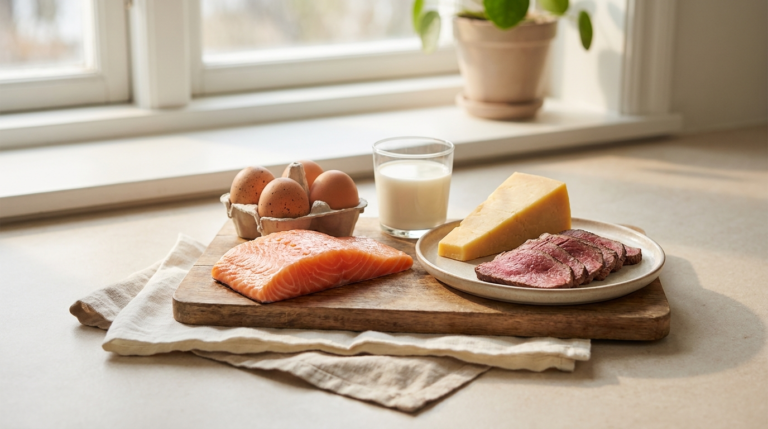
A normal diet with fish, meat or dairy provides somewhere in the region of 40 to 400 mg of taurine a day. Studies tend to use doses of around 500 to 2,000 mg per day, which people generally tolerate well. EFSA regards roughly 6 grams a day as safe, which is well above normal intake. Since an energy drink contains around 1 gram per can, those limits aren’t reached quickly.
Who might genuinely benefit from extra taurine
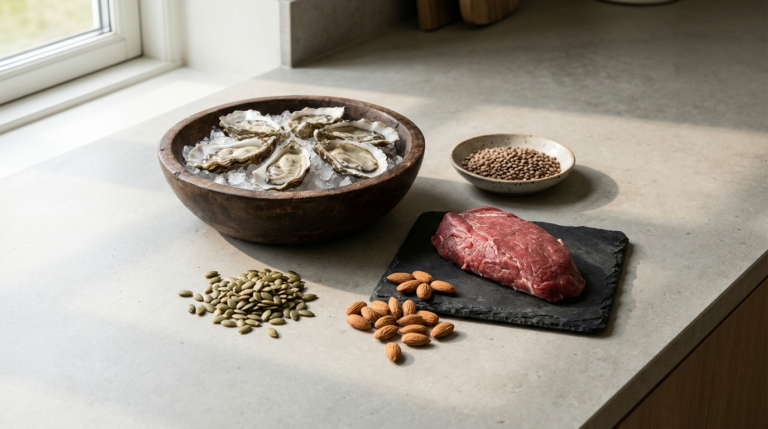
Vegans and vegetarians: taurine is found mainly in meat, fish, shellfish and dairy, and there’s very little in plant foods. People on a fully plant-based diet rely almost entirely on their own production, so this is the group for whom topping up makes the most sense.
Certain medical situations: with some conditions, long-term intravenous feeding, or in premature babies, the body’s own production may not be enough. That’s handled under medical supervision, not as a self-chosen supplement.
For the average healthy person, the plain conclusion is that you don’t need it. If you have a specific medical reason or a restricted diet, it’s worth raising with a doctor or dietitian rather than guessing.
Safety and possible side effects
In the usual amounts, taurine is considered safe and well tolerated. Genuine side effects are rare and mild, with some people reporting minor stomach or gut discomfort at high doses.
The key message is to look at the whole product, not one ingredient. With energy drinks, the risk comes from the caffeine and sugar. As a standalone supplement, stick to normal doses, and check with a doctor first if you’re on medication, pregnant, breastfeeding, or living with a heart or kidney condition. As a supplement it’s also inexpensive, but low cost isn’t a reason to take something you don’t need.
Frequently asked questions
Is taurine dangerous?
In normal doses, taurine is considered safe. The health risks people associate with energy drinks come from the caffeine and sugar, not the taurine. Stick to sensible amounts, and if you’re unsure, check with a doctor.
Why is taurine in energy drinks?
The idea is that it supports the effect of caffeine or smooths off the sharp edges, and it’s part of the standard recipe and product image. But the alertness you feel comes from the caffeine and sugar, not the taurine.
How much taurine per day is safe?
Studies commonly use 500 to 2,000 mg a day and people tolerate it well. EFSA treats around 6 grams a day as safe. An energy drink holds roughly 1 gram per can, so those limits aren’t reached easily.
What's the difference between taurine and caffeine in energy drinks?
Caffeine is a stimulant that wakes you up, while taurine actually has a calming effect on nerve cells. They work in opposite directions, so the boost you feel comes entirely from the caffeine.
Does taurine help with sport and performance?
The evidence is thin and mixed. Some studies show small benefits, others show none, and any effect tends to be small. Creatine and caffeine sit much higher up the list of proven sports supplements.
Is there taurine in plant-based food, and does it come from bulls?
There’s barely any taurine in plant foods, so vegans and vegetarians rely on their own production, which is why topping up makes the most sense for them. And no, it doesn’t come from bulls: despite the name, modern taurine is made synthetically and is fully animal-free.