
No, creatine is not bad for your kidneys if you have normal kidney function. It’s one of the most misunderstood myths in fitness, rooted in a simple name confusion that gets cleared up quickly with a bit of science. Creatine is also one of the most studied supplements on the market, with a solid safety track record.
What Does Creatine Actually Do?
Creatine is an energy carrier in your muscle cells. It boosts your energy reserves during the first few seconds of hard exercise, letting you train slightly harder or for longer. It also pulls water into muscle cells, adding noticeable mass. On average, daily creatine use delivers around 2kg of muscle gain, though that’s a mix of real training results and water retained inside the muscles.
Here’s what matters: it’s the right kind of water. It sits inside muscle cells themselves, not under the skin or in your joints. So despite what some people worry about, you won’t look bloated or puffy.
Is Creatine Bad for Your Kidneys?
No, not if your kidneys work normally. The fear comes from a naming mix-up. The supplement creatine looks similar to creatinine, a waste product your muscle tissue produces that doctors use to estimate kidney function. When you build more muscle (thanks partly to creatine), you produce more creatinine. That can make a blood test underestimate how well your kidneys work, but it’s just a maths problem, not actual kidney damage.
The bottom line: at normal kidney function, creatine is safe. If you have an existing kidney condition, talk to your doctor before starting.
How Much Creatine Per Day? Do You Need a Loading Phase?
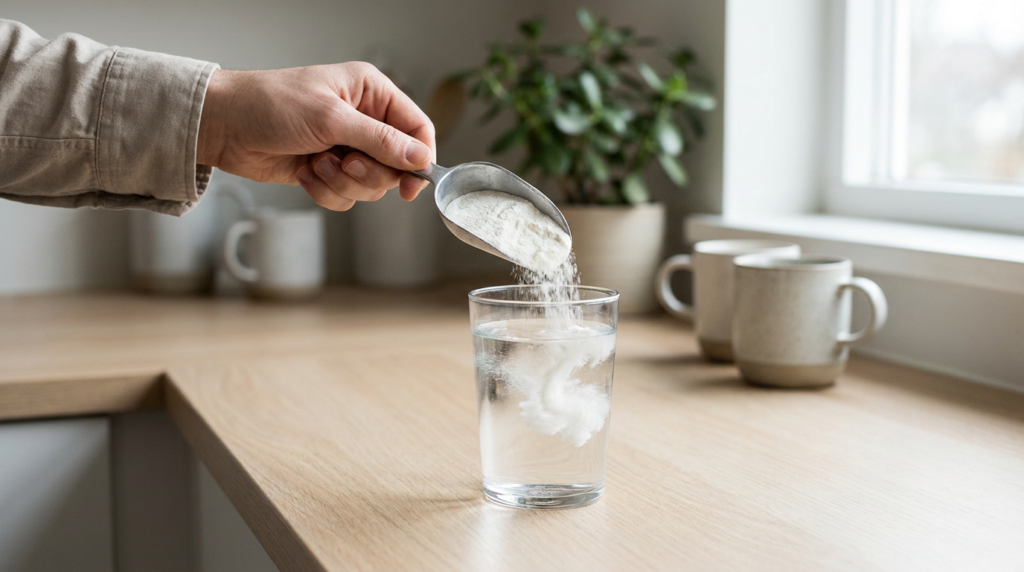
For maintenance, 3 to 5 grams per day is enough. If you’re heavier, aim for the higher end; a rough guide is about 1 gram per 10kg of body weight. Don’t push the dose too high—excess can irritate your digestive system.
You don’t need a loading phase. Loading (taking a high dose for a few days) just fills your muscles’ creatine stores slightly faster, but research shows it adds barely any real benefit. Creatine works like a reservoir: your muscles build it up over 2 to 3 weeks. That’s why timing doesn’t matter, and missing a day won’t hurt.
Which Creatine Should You Buy?
Choose creatine monohydrate. It’s the standard form with the most research behind it: it works, it’s safe, and it’s cheap. Fancier versions like creatine ethyl ester offer no proven advantage. What matters in the end is how much creatine actually gets in your body. For most people, monohydrate is the smartest choice.
Since the active ingredient is the same across all brands, the cheapest monohydrate is usually your best bet. Compare prices per serving to find the real value.
Frequently asked questions
Is creatine really safe if I have healthy kidneys?
Yes. Creatine monohydrate is one of the most heavily researched supplements available, with a strong safety record in people with normal kidney function. The myth comes from confusion between creatine (the supplement) and creatinine (a waste product). If you have kidney disease or reduced kidney function, you should consult your doctor first.
How long does it take for creatine to start working?
Creatine builds up in your muscles over 2 to 3 weeks. You won’t see dramatic changes overnight. That’s why a loading phase (high dose for a few days) doesn’t really help—your muscles reach the same saturation point either way, just slightly slower without loading.
What's the difference between creatine monohydrate and other types?
Monohydrate is the cheapest and most proven form. Newer versions like creatine ethyl ester or buffered creatine claim better absorption or fewer side effects, but research doesn’t back up these claims. You’re paying more for marketing, not better results.
Can I skip creatine some days?
Yes. Because creatine works as a reservoir that builds up in your muscles over weeks, missing a day or two makes no real difference. Just keep taking it consistently over time for the best results.
Will creatine make me bloated or cause water retention under my skin?
No. Creatine pulls water into your muscle cells themselves, not under the skin. You won’t look puffy. The weight gain you see is real muscle water, which actually makes muscles appear fuller and more defined.
Is creatine banned in sport?
No. Creatine is legal in nearly all sports, including competitive bodybuilding, powerlifting, and athletics. It’s one of the few supplements with a strong safety profile and no doping ban.